FISHNET:
Breaking the cycle of poverty through marine conservation and livelihood diversification.
Project Summary:
Project Title:
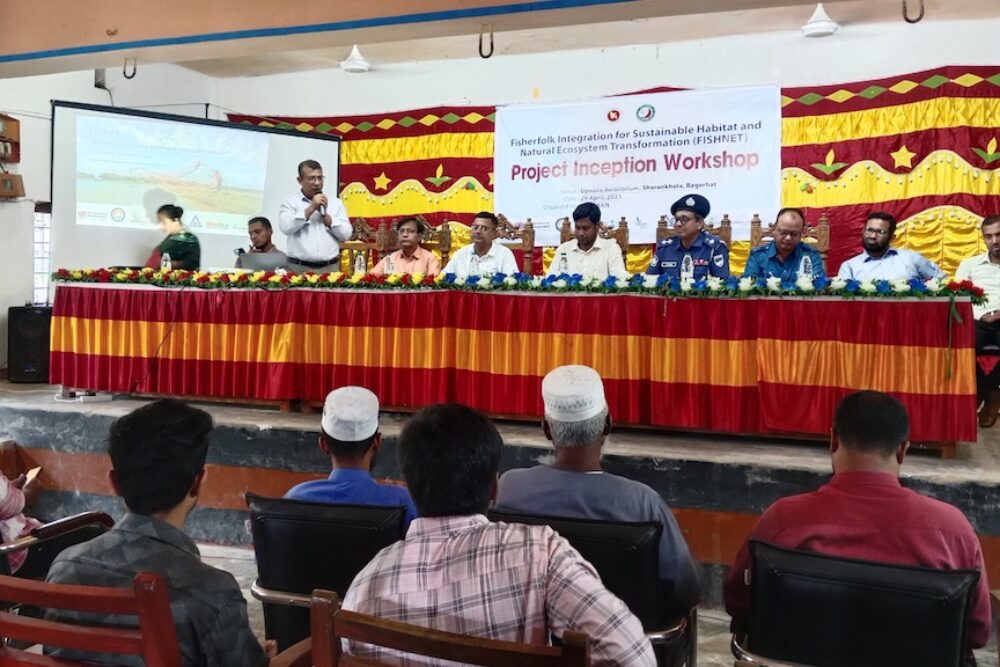
FISHNET: Fisherfolk Integration for Sustainable Habitat and Natural Ecosystem Transformation
Project Duration:
December 2024 – May 2028
Goal:
To support the government in successfully achieving its target of sustainably managing at least 10% of its marine waters through community-led approaches while also extending Marine Protected Area (MPA) efforts to inland waters. This initiative aims to promote sustainable marine industries and address the structural marginalization of fisherfolk across Bangladesh.
What We Do:
i. Capacity Strengthening and Networking Building.
ii. Conservation and Restoration of Marine Eco-system.
iii. Enhancing Resilience and Empowering Women.
iv. Support (Livelihood/Legal/Advocacy).
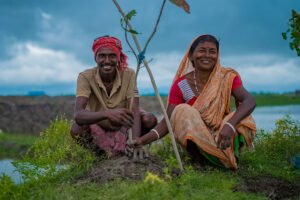
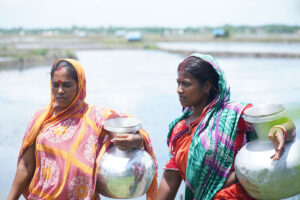
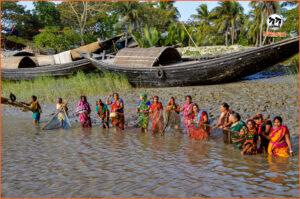
The FISHNET project is dedicated to addressing the root causes of poverty among marginalized fisherfolk communities while combating the degradation of marine ecosystems. The project focuses on revitalizing common-pool resources and promoting sustainable practices through community empowerment and capacity-building. FISHNET works to ensure that fisherfolk are actively involved in decision-making processes, resource management, and conservation efforts.
Objectives
Primary objective:
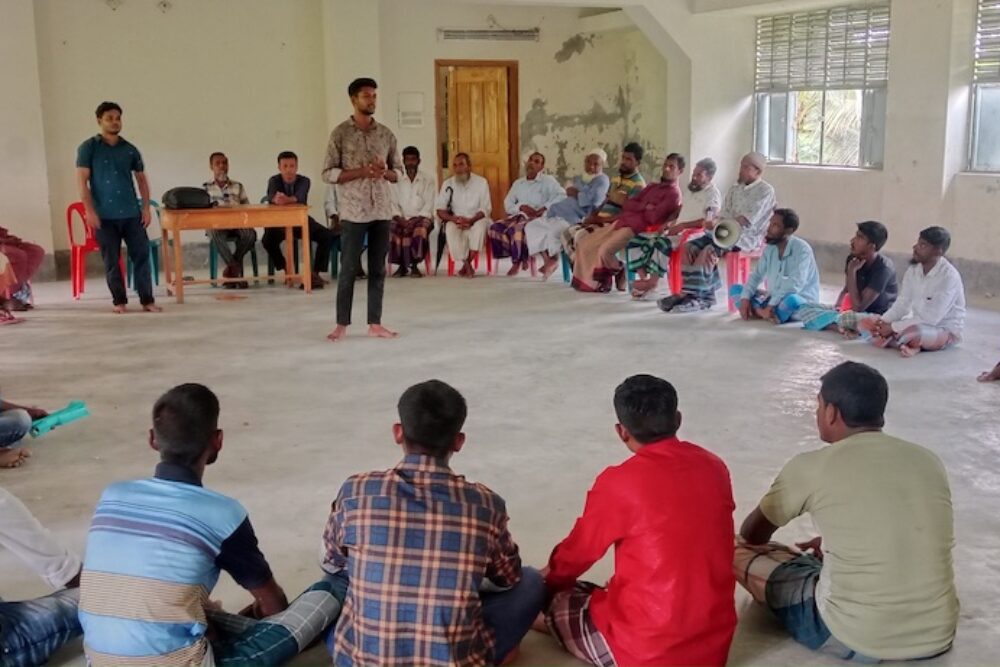
Organize and strengthen the capacity of fisherfolks, allied CBOs, Civil Society Organizations (CSOs), and local NGOs, building networks for active engagement with public departments and policy processes to address vulnerabilities, ensure equitable access to marine resources, and protect the ecosystem.
Secondary objective-I:
To improve conservation and restoration of the marine ecosystems, and pilot community-managed MPAs including tidal floodplains, inlets/canals, and estuaries.
Secondary objective-II:
Improve resilience, lessen dependency on marine resources, and empower women in fishing and ocean dependent households by facilitating access to public and common pool resources/services, and sustainable livelihood opportunities.
Empowering Communities
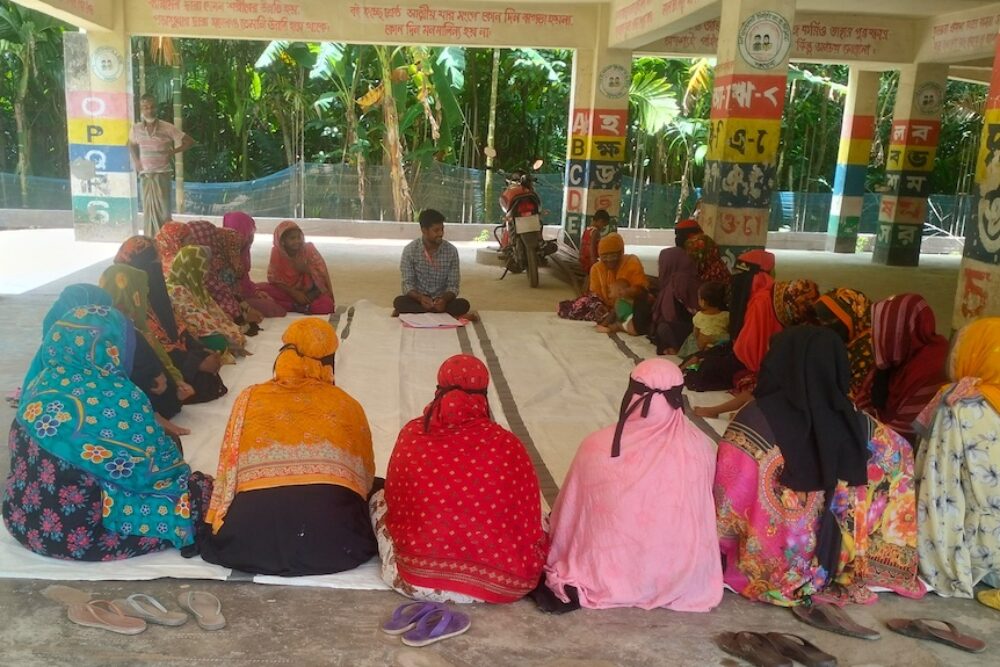
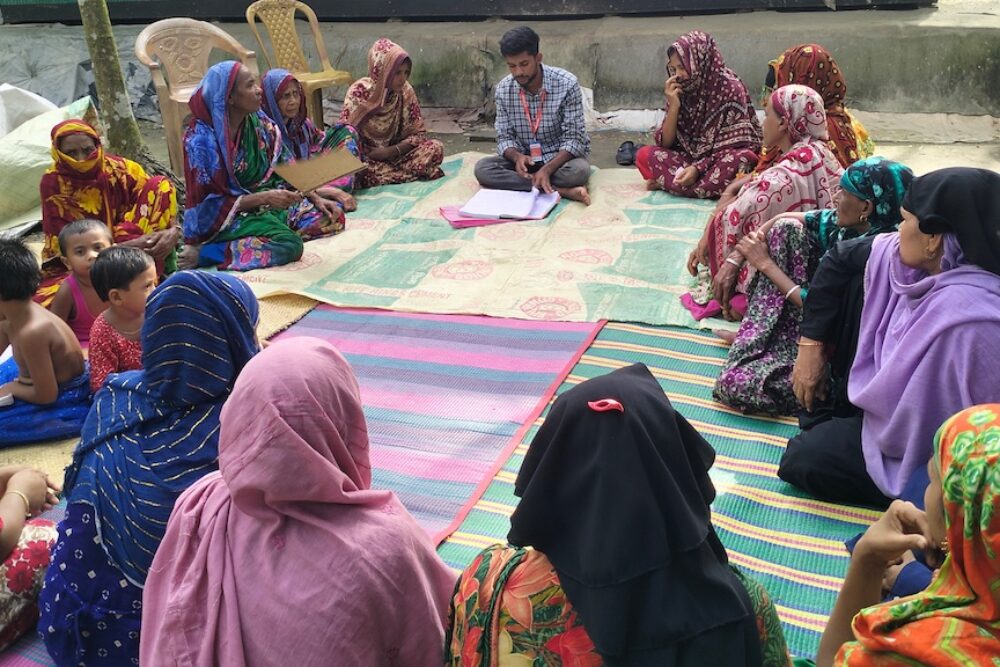
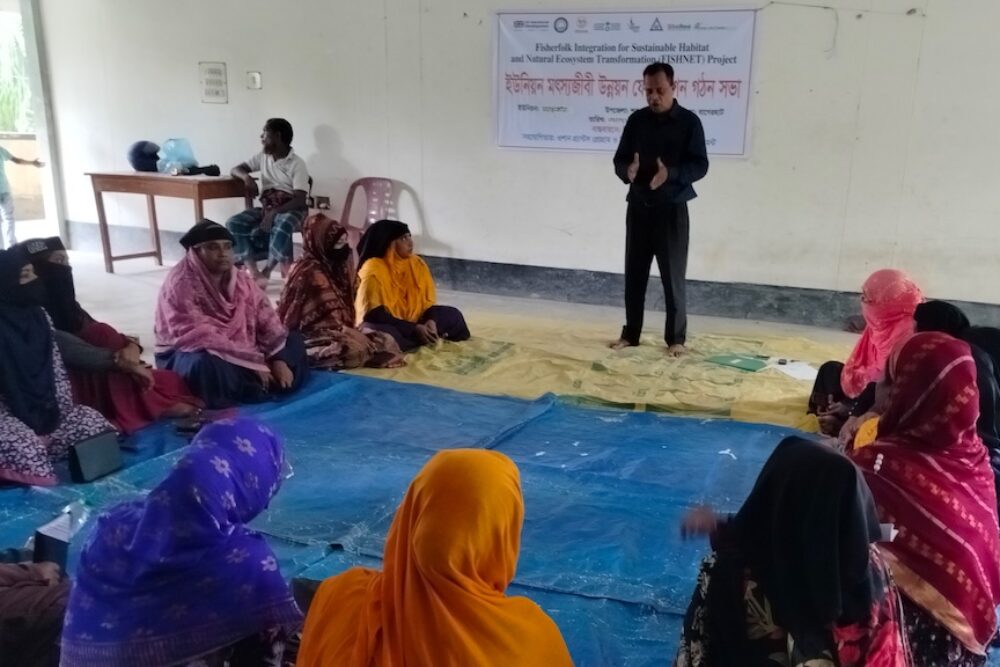
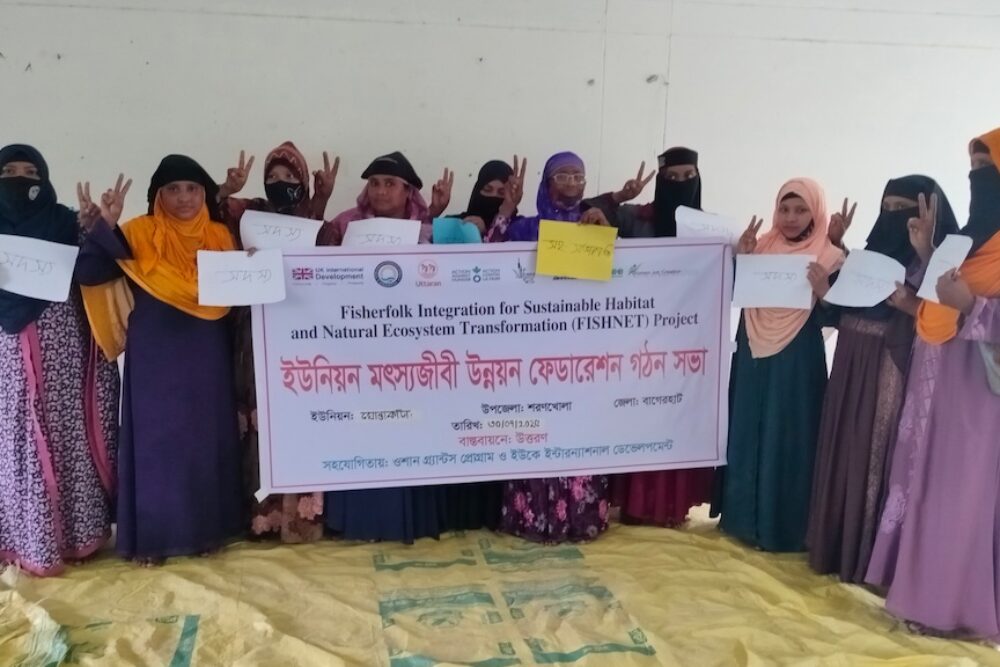
- 20,000 marginalized fisherfolk organized in 400 groups, 68 CBOs/CSOs, and 18 Unions/Upazila Federations.
- Strengthen fisherfolk networks and governance structures.
- Engage CSOs like Bhumi Committee & Paani Committee for legal rights and advocacy.
Conservation through Local Knowledge
2. Train 30 community para-biologists to monitor biodiversity and Illegal, Unreported, and Unregulated (IUU) fishing monitoring.
3. Develop 5 localized land zoning guidelines and enhance IUU fishing monitoring.
4. Work with hatchary entreprenuers to reduce wild larvae collection.
5. Establish community-led Biodiversity Protection Committees (BPCs) for MPA management.
6. Reduce Marine Pollution and establish sustainable waste management.
Dignified Livelihood & Justice
2. Train small fisherfolk and provide improved tools for sustainable fishing and fair pricing.
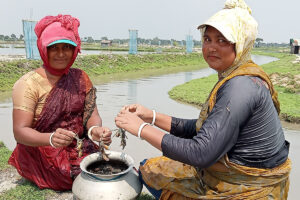
3. Support 2,000+ women to shift from unsafe shrimp by fry collection to sustainable livelihoods.
4. Engage 850 Households to eliminate child labor by offering:
• Informal education (under 15)
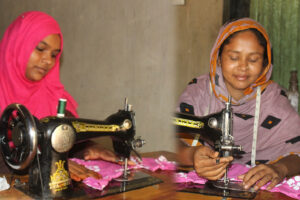
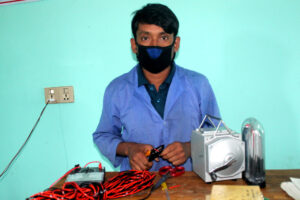
• Vocational training (Age 15-18)
• Alternative income support for families.
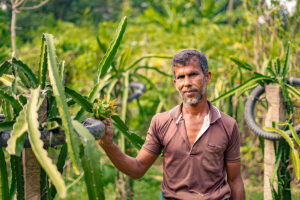
5. Promote eco-friendly, multi-species shrimp farming to reduce environmental harm.
6. Provide safety gear to 200 boats and establish early action protocols with key stakeholders.
7. Equip fishers with forecasting systems and lifesaving protocols.
Project Location
Beneficiaries
Direct Beneficiaries
Informal Community Based Organizations (CBOs)
News & Events
Implementing Parners

Supported by:

Funded by: