
 Writer:
Zahid Shashoto
Head of Program, Uttaran
A Brief about the Southwest Coastal Region of Bangladesh
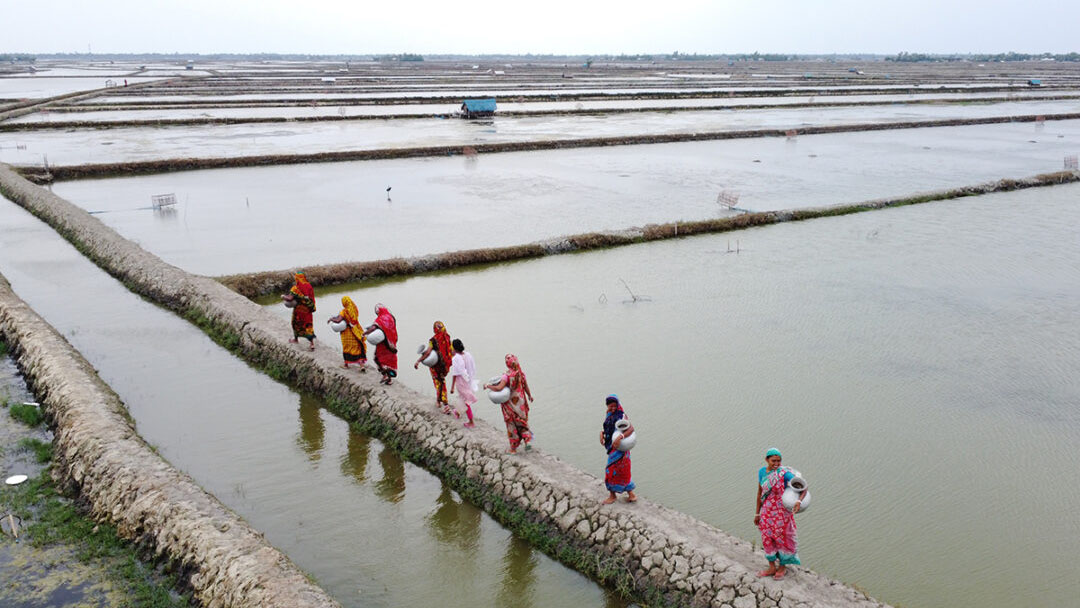
In southwest coastal Bangladesh, the rivers are entirely tidal, with almost no upstream freshwater flow, a disconnection that began during the colonial period due to anthropogenic interventions.
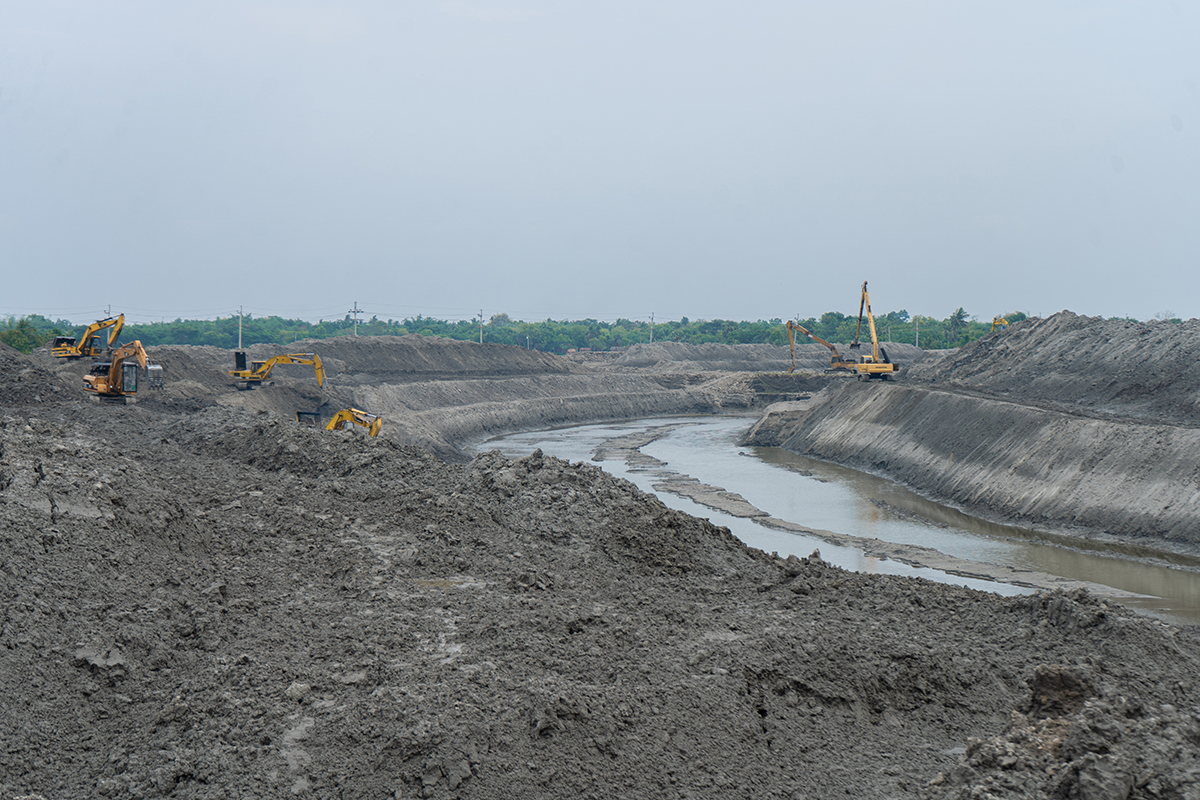
For generations, local communities had indigenous systems to manage these tidal rivers. They built temporary earthen embankments during the dry season to cultivate crops and intentionally breached them during the monsoon, allowing rivers to deposit fertile silt onto the floodplains and naturally scour their beds to maintain navigability.
However, with the introduction of permanent polders in the 1960s, this delicate balance was disrupted and tidal rivers were disconnected from its tidal floodplains. Within a few decades, the region began experiencing chronic waterlogging, lasting up to six to nine months a year, making farming, and often even living, nearly impossible.
The tidal forces here are immense: saltwater from the Bay of Bengal travels as far as 150 kilometers inland, reshaping land and livelihoods. Once, these tides built the world’s most fertile delta; now, after decades of embankments, diversions, and poor management, they bring salinity, erosion, and prolonged inundation.
This is a landscape where climate, history, and inequality constantly collide, and where resilience must mean far more than simply raising embankments.
Where Vulnerability Began
Climate change did not create vulnerability here, it only magnified it.
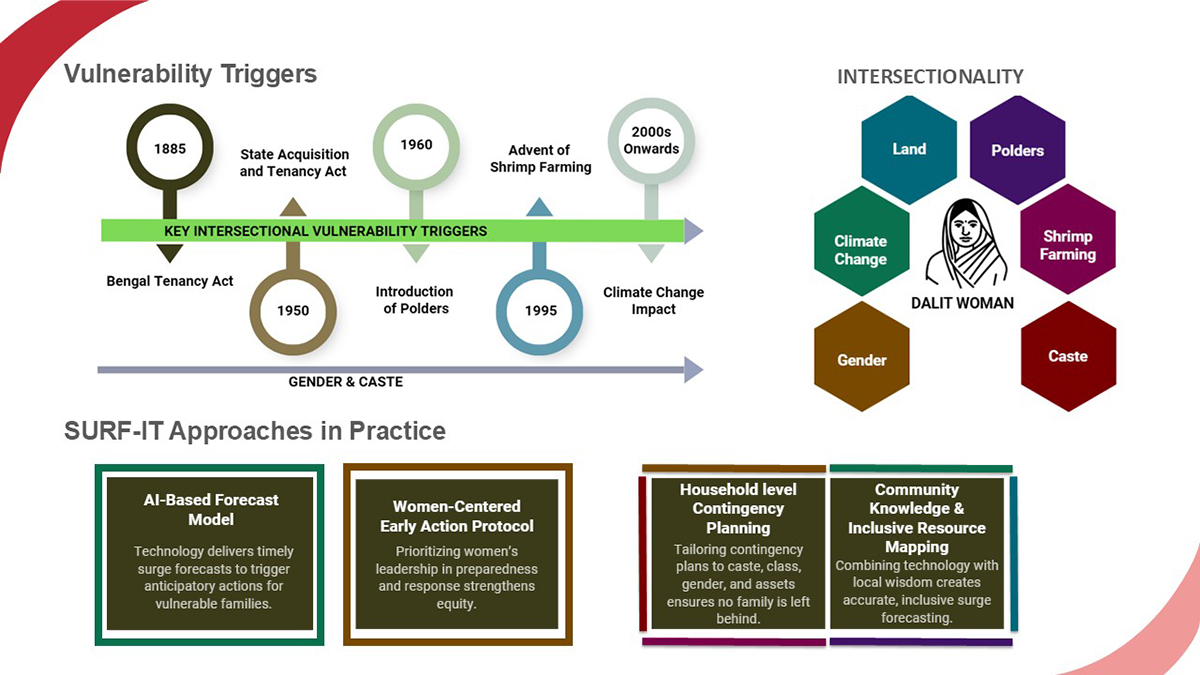
Our story begins in 1885, when the Bengal Tenancy Act turned land from a communal right into a commercial property.
That moment marked the start of land commodification, displacing peasants and birthing a class of landless laborers.
In 1950, the State Acquisition and Tenancy Act abolished the zamindars, but the land did not go to the tillers. Those who had documents, money, or power kept their land; those who had hands to work the soil lost it. Women, Dalits and other marginalized groups were invisible in the reform, and so inequality was legalized, not erased.
Later came polders, massive embankments built to “protect” people from floods and boost production, by converting tidal floodplain into freshwater zone and disconnecting rivers from its tidal floodplain. Unfortunately the polders trapped monsoon water, blocked sediment deposition or delta formation process, and created ecological catastrophe, Waterlogging that can last over 6 months and dead rivers as sediments settled on river bed.
This has led to large commercial farmers supported by key agencies introducing shrimp, as paddy was getting difficult to grow in the waterlogging condition. The shrimp boom of the 1990s arrived, bringing foreign currency, but also stagnant salt water inside the polders, land grabs, and enclosure of the commons.
Finally, the last blow of vulnerability, climate change entered as the newest layer in this long, accumulated crisis.
So, when a cyclone hits today, it lands on top of a century of historical injustice.
A Life within Layers: Rina’s (Imaginary Character based on real life scenario) Story
Let me illustrate that through one life.
Rina is a Dalit Hindu woman from Shyamnagar, a story that reflects hundreds of women we meet through our work. She was born on the edge of a polder, the daughter of landless agricultural laborers. Her father worked on other people’s land, her mother collected shrimp fry from the canals.
When she married, her husband cultivated rice. But soon, due to the saline water from shrimp farms farming became impossible. The crops failed, debts rose, and her husband migrated to the city, and never came back.
As a separated Hindu woman, Rina cannot inherit property from her parents under personal law. As a Dalit, her shelter is usually located in the lowest-lying part of the village, the first area to become waterlogged or flooded during tidal surges or cyclones. As landless, she mostly makes her shelter lives near or atop vulnerable embankments that breach frequently under pressure from the tides. And as a woman, she is rarely heard in Union Disaster Management Committee meetings
When the embankment breaks, she loses her home. When it is repaired, she is excluded from the decision of where it will be built. Rina’s struggle is not with the tide alone, it is with the structures that have pushed her to the lowest rung of every hierarchy: class, caste, gender, and now climate.
What We Are Doing: The SURF-IT Approach
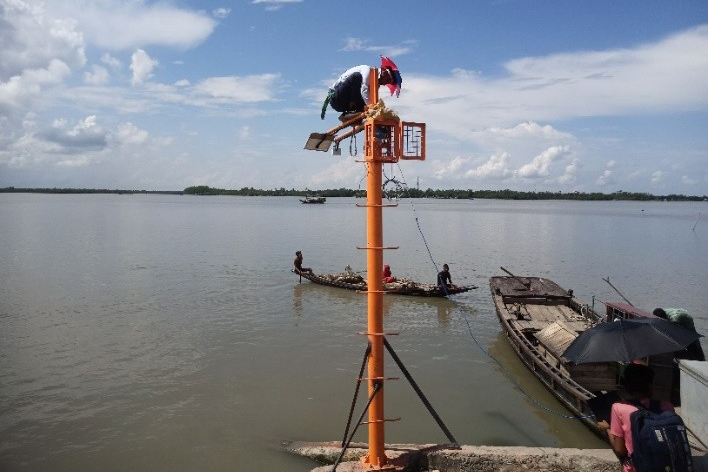 At Uttaran, we are trying to address some of these layers through the SURF-IT project — Spatial Surge Forecasting using Artificial Intelligence and Community Knowledge.
We’re developing an AI-driven surge model supported by community knowledge that predicts where embankments might breach or overtop during a tidal surge, followed by an women centered early action protocol.
But more importantly, we translate that science into household-level contingency planning. We sit with individual families, recognizing their various form of intersectional vulnerabilities and help them design simple but life-saving plans based on their limited resources.
It’s an approach that combines forecast technology with community foresight. And it’s working, households now act before a surge, reducing loss and damage. But we also see our limits.
Our protocol addresses one disaster, “tidal surge” and one layer of intersectional vulnerability as explained before “gender”. It cannot yet reach the deeper, older vulnerabilities of caste, landlessness, maladaptation and economic exclusion that determine who can act early and who cannot.
AI can predict water heights, but it cannot yet read social hierarchies.
And that’s where Uttaran’s role as a grassroots organization becomes vital. Even though the SURF-IT project itself cannot address every layer of intersectional vulnerability, Uttaran can connect them.
When a donor funds a project, it often sees it as a single raindrop, a focused intervention in one sector. But for a grassroots organization like ours, each project is one drop among many in a larger rainfall.
Because we understand the intersections, we can hold a bigger bucket, to concentrate, complement, and align different sectoral funds without overlap, so that support for Rina’s household preparedness links with land-rights advocacy, women’s inheritance rights, WASH access, and livelihood recovery.
This way, we start addressing not just the surge, but the root causes that make that surge devastating.
Why Intersectionality Matters
That’s why an intersectional lens is essential for adaptation. It helps us see that “vulnerability” is never singular. The same surge does not affect everyone equally, it flows through social structures just as water flows through river channels.
If we design climate policies that treat people as one homogenous vulnerable group, we risk rebuilding the same inequalities we inherited from history. We may make embankments stronger, but if the landless, the Dalit, or the divorced woman cannot access those embankments, then adaptation becomes another form of exclusion.
True resilience must therefore move from forecast to fairness, from predicting water to redistributing power. Because resilience is not only about keeping the sea out, it is about letting justice in.