
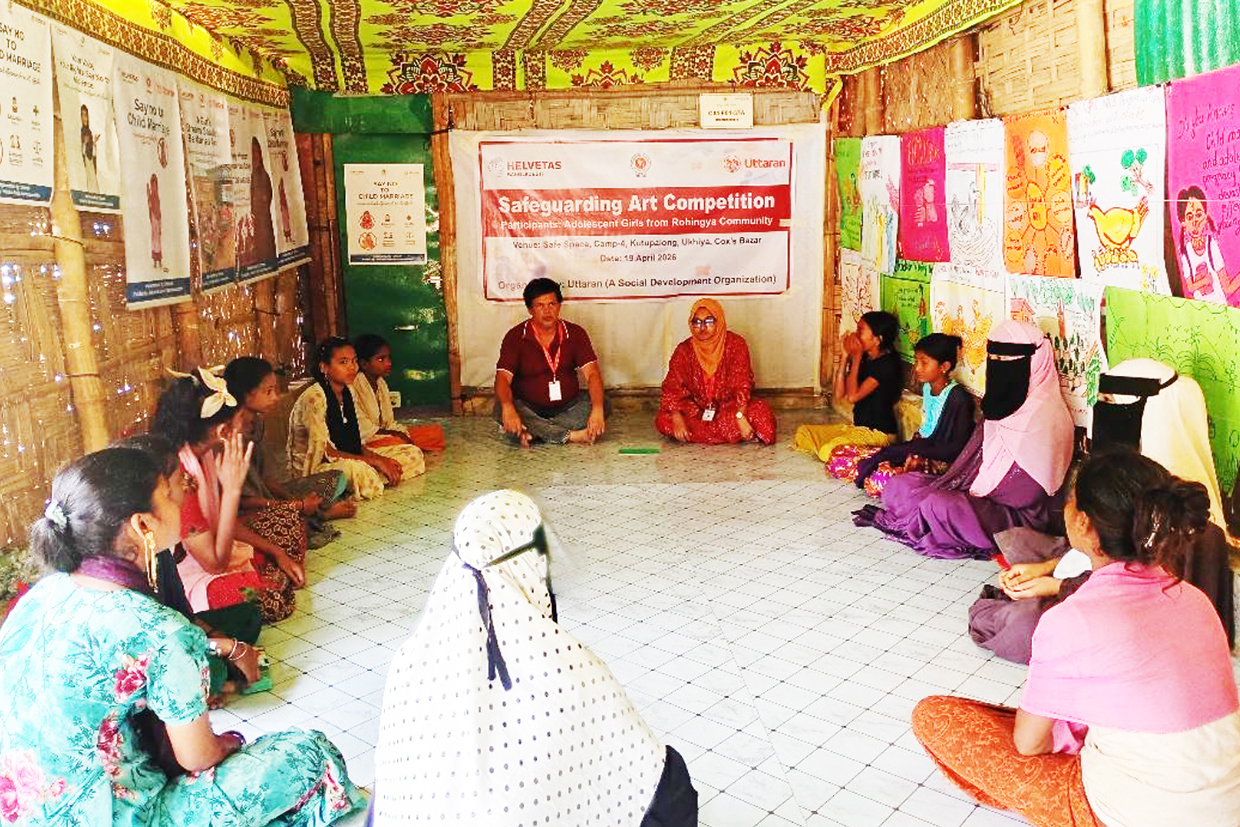
Uttaran, a national NGO, is implementing the “Nari Shakti, Samaj Shakti” (NSSS) project, meaning “Women’s Power, Social Power”, with technical and financial support from HELVETAS Swiss Intercooperation. The initiative focuses on strengthening referral mechanisms and protection systems to safeguard the rights and dignity of young girls. By addressing harmful social norms, the project aims to improve overall wellbeing and directly combat Gender-Based Violence (GBV) and Early Childhood Marriage (ECM).
To mark Safeguarding Week, Uttaran’s NSSS project hosted a drawing competition for Rohingya adolescent girls on April 19, 2026. Held at the Camp 4 Safe Space Center, an initiative supported by HELVETAS Swiss Intercooperation, the event brought together 13 participants. Through the creative medium of art, these young girls explored themes of safety and protection, using their vibrant drawings as a tool for self-expression.
The drawing competition commenced with an orientation session led by the Uttaran NSSS project team. The team facilitated a discussion with the adolescent girls regarding the various forms of sexual harassment and gender-based violence (GBV) prevalent, safeguarding and reporting channel within the camps. These discussions focused on actionable strategies to empower the girls to recognize, resist, and report such abuses.
Through this competition, Rohingya adolescent girls showcased their artistic talents while engaging deeply with the Uttaran NSSS project’s safeguarding themes. For these young refugees, drawing serves as a vital medium for allowing them to communicate their lived experiences and perceptions of camp-level protection risks. Working individually with colored pencils, each contestant translated her inner thoughts and personal experiences onto paper. The artwork provided a stark look into the girls’ lived realities. Their drawings depicted various forms of exploitation and abuse, including sexual harassment, child labor, trafficking, kidnapping, eve teasing, the heavy burden of early forced marriage and premature motherhood, graphic portrayals of physical violence and trauma.
The art competition underscored the profound healing power of art and creativity, which remained on full display throughout the event. By providing a safe space for creative expression, the NSSS project successfully helped participants process complex emotions and advocate for their own safety.
Sajida, age 17, has participated in NSSS-supported life skills sessions. These modules have equipped her with the communication skills necessary to initiate meaningful dialogues with her family regarding critical social protection issues. Her commitment was highlighted during the art competition. As she explained, “I liked learning skills to help family members and neighbours understand stop violence against women, children and girls. I also learned how to deal with boys who harass us when we’re walking on the roads. And I know where to report”. Her words reflect the practical, life-changing impact that the NSSS project’s empowerment sessions have on the daily safety of adolescent girls in the camps.
“Noor Kolima, a 13-year-old contestant, shared: ‘I drew pictures about child labor to show how heavy work harms a child’s health. I feel completely secure and welcome with the volunteers at this safe space of Uttaran. They have taught us the importance of sharing our problems openly with our parents, Besides I know when to say no and what is harmful for us’”
The art competition concluded with a prize distribution ceremony and refreshments for all attendees. The adolescent participants expressed high levels of satisfaction, noting their appreciation for the opportunity to engage in such a vibrant event.